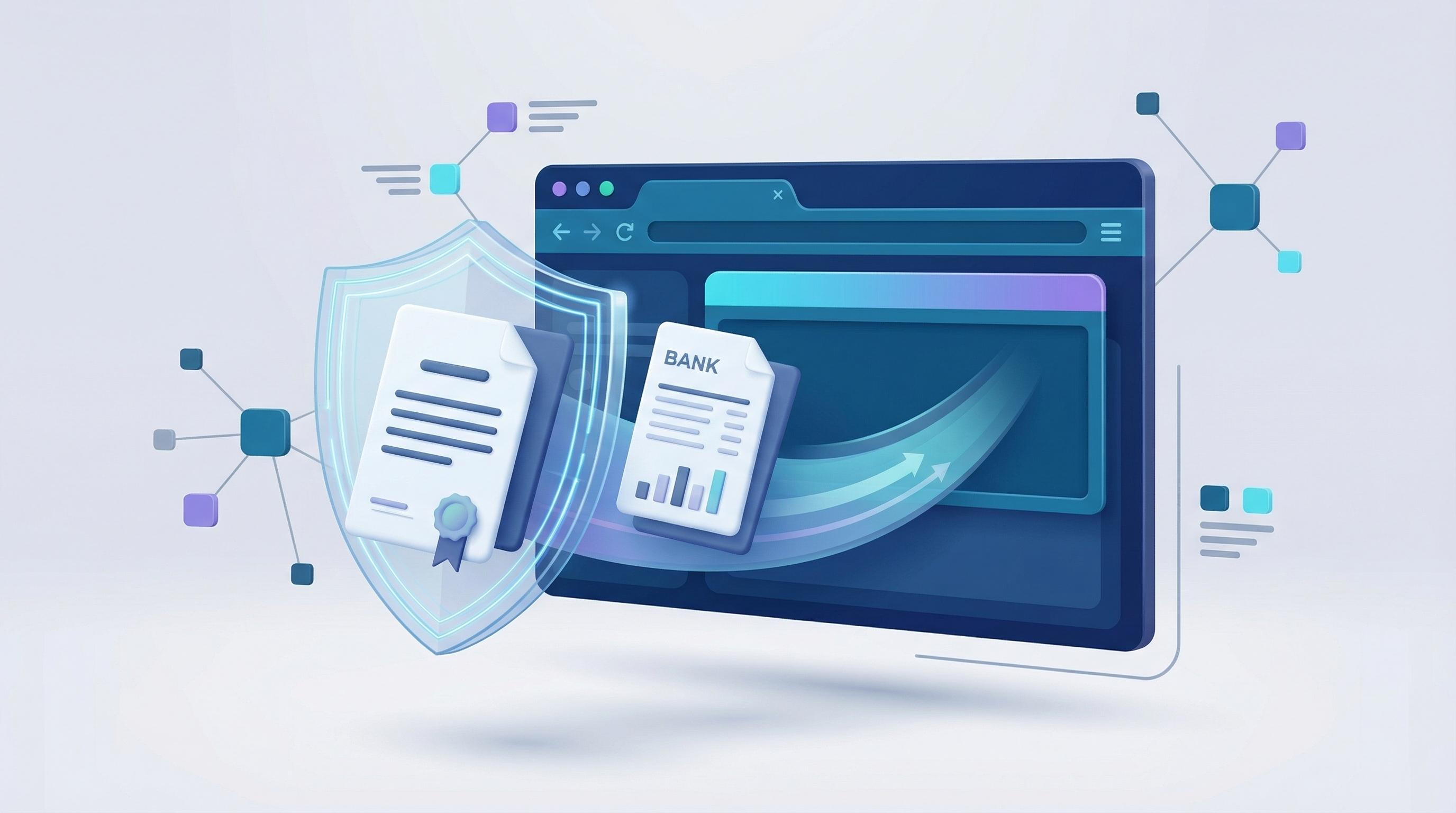
In an increasingly digitized professional landscape, the need to convert file formats is a daily occurrence. We shift PDFs to Word documents for editing, transform spreadsheets into localized formats for analysis, and convert images into manageable sizes for integration. For developers integrating APIs, designers moving assets, or students compiling research, these conversion tasks are often minor friction points solved by the nearest available web utility. However, the paradigm shifts dramatically when the subject matter changes from public documentation to highly sensitive financial statements, legal contracts, or proprietary technical schematics. The standard convenience-first approach to file conversion suddenly becomes a massive security liability, opening the doors to data breaches and regulatory non-compliance. The target audience for this guide—developers, designers, students, and privacy-conscious professionals—understands that data integrity is paramount. For this demographic, a standard "cloud-based" converter is no longer a viable option for critical workflows. The dilemma has always been the trade-off between the ease of use offered by online tools and the robust security of air-gapped, local software installations. This article provides a comprehensive technical framework for navigating this dilemma. We will analyze the specific risks inherent in traditional online conversion models and explore the revolutionary shift toward high-performance, client-side browser technologies that offer the best of both worlds: utility-level convenience with absolute data privacy.
The Hidden Vulnerabilities of Traditional Document Conversion
The vast majority of document conversion services operating today utilize a server-side processing model. From a technical perspective, this architecture requires the user to upload their source file to a remote server. Once the file is received by the endpoint, a server-side application (often running on a monolithic architecture or a serverless function) performs the conversion logic. After the processing is complete, a new download link is generated and presented to the user. While this process is visually seamless to the end-user, it introduces several significant critical security failure points that are unacceptable for financial or legal documentation. The first and most obvious vulnerability is data in transit. Although most reputable modern web services employ Transport Layer Security (TLS) to encrypt the data passing between the user’s browser and the server, this only protects the data from interception by third parties. It does not protect the data from the service provider itself. The moment the file arrives at the server, it is decrypted for processing. If the conversion service’s infrastructure is compromised, or if they have malicious intent, your sensitive data—containing social security numbers, bank details, or trade secrets—is fully exposed. Furthermore, many free services monetize their platforms by analyzing metadata or, in worst-case scenarios, aggregating the data itself, which directly violates GDPR, CCPA, and standard NDA agreements. Secondly, the issue of data at rest presents a massive compliance challenge. Even if a service provider claims to delete files immediately after conversion, "deletion" on a modern server infrastructure is rarely instantaneous or absolute. Files may persist in temporary directories, application logs, browser caches, or, more critically, in automated backup systems that back up the server’s state. For legal professionals handling sensitive intellectual property or developers working with client financial data, this persistence creates an untraceable and unacceptable audit trail risk. The lack of transparency regarding the server’s backend operations means you are operating entirely on trust, rather than verifiable technical controls.
The Paradigm Shift: Understanding Client-Side, In-Browser Conversion
The technical solution to these pervasive security risks is not to abandon web-based utilities but to evolve their architecture. We are witnessing a fundamental shift from server-side dependency toward client-side execution, a movement that places data control squarely back in the hands of the user. In this modern paradigm, the conversion process does not occur on a remote machine owned by a third party. Instead, the computational logic required to manipulate and transform the file is downloaded to the user's browser and executed locally within a secure sandbox environment. This approach effectively eliminates the primary attack vector: the file upload itself. This breakthrough is largely powered by WebAssembly (Wasm). WebAssembly is a binary instruction format that allows code written in high-performance languages like C, C++, or Rust to run in web browsers at near-native speeds. This is not just a marginal improvement; it is a critical technological leap. Previously, complex document manipulation within a browser using JavaScript was slow, memory-intensive, and often unstable. Wasm allows developers to compile powerful, existing, and well-vetted conversion libraries into highly efficient modules that can be executed directly in the user’s browser interface. This opens the door for robust, feature-rich utility tools that rival desktop applications. For the user, the workflow remains identical to traditional methods—drag a file into the browser, select the output format, and click a button. However, the underlying technical process is radically different. The web application loads the conversion logic (the Wasm module), and the file you select is processed entirely within your computer’s RAM or local temporary storage. No data packets containing your sensitive documents ever leave your network. The conversion happens with zero latency, as there is no network round-trip for uploading and downloading heavy files. The result is instant, secure, and technologically verifiable data privacy.
Managing Financial Documents: PDF to Structured Formats
Financial data handling requires absolute precision and confidentiality. For developers creating accounting integrations or designers managing project budgets, the need to extract data from a static PDF bank statement into an editable, structured format like CSV or Excel is a frequent necessity. The risk, however, is that standard cloud converters processing these PDFs may inadvertently (or maliciously) retain copies of the structured output. This output contains detailed transaction histories, balances, and account holder details—perfectly aggregated data for identity theft or corporate espionage. When utilizing a client-side converter powered by Wasm, this workflow becomes inherently secure. The conversion logic that identifies tables and extracts text from the PDF is running locally. You can technically verify this by monitoring the browser’s Network tab in developer tools; after the initial application load, no significant network traffic should occur during the file processing phase. For technical professionals, this architecture provides a verifiable guarantee that satisfies internal security audits. The converted CSV or Excel file is generated right in the browser, ready for immediate download, with the assurance that no third party ever had access to the intermediate or final data.
Workflow Example: Local PDF-to-CSV Extraction
A typical secure workflow for a developer might look like this: A user needs to ingest a PDF invoice into an internal expense tracking system. The developer builds or uses a client-side utility that loads a specific Wasm module trained in optical character recognition (OCR) and table extraction. The user drags the invoice into the browser. The Wasm module analyzes the document structure locally, extracts the line items, and compiles them into a clean CSV format. The CSV is then immediately available to be imported into the database via the client-side application logic. This entire loop is self-contained and closed.
Converting Legal Documents: Ensuring Integrity and Chain of Custody
The legal and contractual domain operates under strict confidentiality agreements. Converting a legal contract from DOCX to PDF for signature collection or from a legacy format to an archival format like PDF/A is a sensitive operation. In these scenarios, maintaining the strict chain of custody of the document is critical. If a document is uploaded to a cloud service, even for a few seconds, that chain is technically broken, as the document has been in the possession of an unverified third party. This creates potential liabilities and breaches of client confidentiality. Furthermore, traditional cloud conversion can sometimes fail to accurately render complex legal formatting, such as line numbers, cross-references, or complex tables, leading to subtle changes in the document’s meaning. When the conversion happens client-side, using optimized Wasm modules based on standard rendering engines, the processing benefits from predictable local resources rather than variable server-side load. More importantly, the data privacy is absolute. For legal professionals or designers managing client contracts, the peace of mind that sensitive NDAs or master services agreements never left their device is invaluable.
Case Study: Client-Side Conversion for Contract Management
Consider a design agency finalizing a large contract with a new client. They need to convert the final agreement to PDF to lock in the terms before sending it for signature. By using a secure, client-side converter, they ensure that the document’s exact formatting is preserved as the Wasm module handles the layout engine. Simultaneously, they maintain complete control over the intellectual property within the contract. This proactive approach to security demonstrates professionalism and technological maturity to their clients.
Philosophy and Advantage of Flux-Convert (Built by Codepal)
At Flux-Convert, a web utility developed by Codepal, we are deeply committed to this philosophy of local-first processing. Our mission is to provide the critical utility tools that developers, designers, and students need, without forcing them to compromise on data integrity. We recognize that the internet is moving toward a decentralized, user-centric model, and the tools we use should reflect that evolution. Flux-Convert is built from the ground up to leverage the full power of client-side technologies like WebAssembly, ensuring that the "cloud" is only used for application delivery, not data processing. The technical advantages of using a Wasm-powered client-side architecture are profound. First, as discussed, is absolute data privacy: files never leave your device. Second, the user experience is dramatically improved by zero latency. Conversions happen as fast as your local CPU can process them, eliminating the wait times associated with uploading large files or waiting in a server-side queue. Finally, this model allows us to offer these utilities at zero cost to the user. By eliminating the massive infrastructure overhead required to run server-side processing, we can pass those savings directly to our community, focusing on building better tools rather than managing expensive server clusters.
Conclusion: Adopting a Privacy-First Documentation Workflow
The landscape of professional document management is changing, and security is no longer an optional feature—it is the foundation. Whether you are a developer integrating file manipulation into a workflow, a student compiling confidential research, or a designer managing sensitive client assets, the shift toward client-side file conversion is not merely a convenience; it is a technical necessity. By understanding and embracing technologies like WebAssembly, we can reclaim control over our data, maintaining the convenience of online utilities while achieving the security of local software. We encourage all technical and creative professionals to audit their current file handling processes and actively seek out tools that prioritize local processing. The risks associated with traditional cloud converters are too high when dealing with financial and legal data. Utilities like Flux-Convert are setting a new standard for web tools, where data privacy is guaranteed by architecture, not promised by a privacy policy. It is time to make the switch to a truly secure, efficient, and privacy-conscious documentation workflow where your data remains where it belongs: entirely in your control.