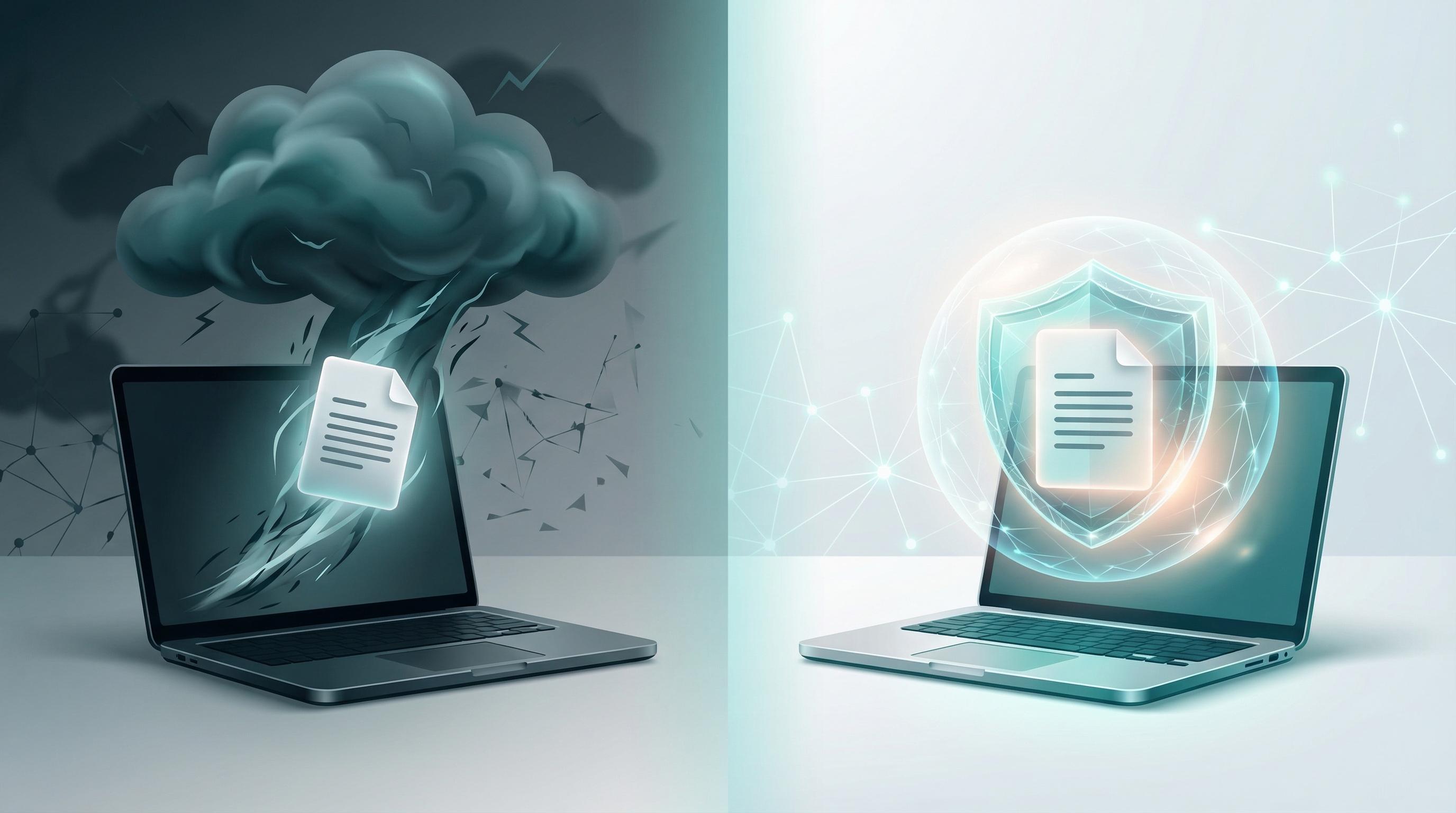
In the modern digital workspace, format compatibility is a persistent hurdle. Whether you are a designer needing to transform a complex vector graphic into a standard web image, a developer formatting a raw data file, or a student combining research documents, file conversion is a daily necessity. For over a decade, the default solution has been a rapid web search leading to a myriad of "free online file converters." These platforms offer an incredibly frictionless experience, requiring no software installation and delivering converted files in mere seconds. However, this apparent convenience masks a deeply flawed and inherently insecure architectural model that compromises user privacy. The fundamental issue lies in the hidden mechanics of traditional web-based utilities. To transform your file, the vast majority of these free services require you to upload your data to their centralized, remote servers. The moment your document, image, or code snippet leaves your local machine, you relinquish all control over its security, its processing environment, and its ultimate destination. For professionals handling proprietary corporate data or individuals managing highly sensitive personal information, this server-side processing model represents an unacceptable vulnerability. Understanding the structural dangers of these platforms is the first step toward securing your digital workflow. By examining their opaque business models, the technical vulnerabilities of remote processing, and the severe implications for different professional sectors, we can see why a paradigm shift is necessary. The future of utility computing does not lie in trusting unknown servers, but in leveraging modern browser capabilities to keep data exactly where it belongs: on your device.
The Illusion of the "Free" Business Model
It is a well-established maxim in the technology sector that if you are not paying for a product, you are the product. Operating a global file conversion service requires substantial financial overhead. Maintaining high-capacity servers, managing massive bandwidth consumption for millions of daily uploads and downloads, and funding continuous software development are incredibly expensive endeavors. When a service is provided entirely free of charge, the revenue required to sustain these operations must be extracted through alternative, often invisible, channels. The most visible monetization strategy is aggressive advertising. Many of these utility websites are saturated with intrusive banner ads, pop-unders, and embedded tracking pixels. While visually frustrating, the deeper danger lies in the invisible tracking scripts that monitor your behavior, log your IP address, and build comprehensive digital profiles based on the types of files you are converting. These detailed user profiles are routinely aggregated and sold to third-party data brokers and marketing agencies without explicit, informed consent. A far more insidious threat involves the direct exploitation of the uploaded data itself. While reputable-looking services prominently feature privacy policies claiming that files are permanently deleted within an hour or two, these promises are largely unverifiable. The term "deleted" can be legally ambiguous, sometimes meaning the file is simply hidden from the public interface while remaining on a backup server. Furthermore, the valuable metadata attached to your files—such as author information, creation dates, device specifications, and location data—can easily be stripped, cataloged, and monetized before the original file is theoretically purged.
Core Vulnerabilities of Server-Side Processing
The architectural requirement of uploading a file to a remote server introduces multiple critical points of failure. From the moment your data travels across the public internet to the time it rests on a third-party hard drive, it is exposed to an environment entirely outside of your control. Even if a service operator has no malicious intent, their infrastructure may lack the enterprise-grade security necessary to protect your information from sophisticated external threats.
Unsecured Infrastructure and Data Breaches
Free utility websites are frequent targets for cybercriminals precisely because they act as massive data aggregators. They process an immense volume of user-generated content daily, yet they often lack the robust cybersecurity budgets of major tech corporations. If a hacker successfully breaches the converter’s server architecture, they gain access to a treasure trove of unencrypted, highly sensitive documents. This means the proprietary source code, confidential legal contracts, or unreleased product designs you uploaded could easily end up exposed on the dark web alongside millions of other compromised files.
The Risk of Malicious Payloads
The conversion process itself can be manipulated into a vector for malware distribution. In a server-side environment, you are completely blind to the software stack processing your file. If the converter’s underlying software is compromised or outdated, malicious actors can inject execution scripts, macro viruses, or ransomware directly into the newly converted output file. A user, believing they are downloading a safe, clean PDF or Word document, unknowingly executes a malicious payload on their local machine, bypassing traditional antivirus protections that may not flag the seemingly legitimate file format.
Regulatory Compliance Failures
For modern businesses, utilizing free server-side converters is a massive regulatory liability. Frameworks like the General Data Protection Regulation (GDPR) in Europe or the California Consumer Privacy Act (CCPA) mandate strict control over Personally Identifiable Information (PII). When an employee uploads a client spreadsheet or a human resources document to an unvetted free converter, the company has effectively transferred sensitive data to an unauthorized third-party processor. Because these free tools rarely provide standard Data Processing Agreements (DPAs), using them instantly violates data sovereignty laws, exposing the organization to severe financial penalties and reputational damage.
Sector-Specific Risks and Consequences
The stakes of data exposure scale exponentially depending on the nature of your work. A generic server-side converter does not differentiate between a high school essay and a multi-million-dollar architectural blueprint; it processes both with the same opaque, risky infrastructure.
Developers, Designers, and Intellectual Property
For developers and UI/UX designers, the primary risk is the leakage of intellectual property. Converting specialized assets—like transforming an unreleased SVG app logo, converting proprietary JSON configuration files, or extracting assets from a PSD—requires uploading core components of your product. If these assets are intercepted or retained by the server, it can result in stolen code, cloned designs, and severe breaches of non-disclosure agreements (NDAs) with clients. Furthermore, uploading commercially licensed fonts to extract them into web formats often directly violates the creator's End User License Agreement (EULA), creating unexpected legal liabilities.
Students, Researchers, and Personal Privacy
Students and academic researchers frequently handle vast amounts of pre-published data, unique datasets, and grant applications. Uploading thesis drafts or raw research data to a free converter jeopardizes academic integrity and potential patent opportunities. On a more personal level, individuals routinely use these tools to convert tax returns, bank statements, or medical records for easier emailing or printing. Exposing this level of detailed PII to an unknown server creates a significant, unnecessary risk of identity theft and financial fraud.
The Client-Side Revolution: WebAssembly and Local Processing
The solution to these pervasive security threats is not to build more secure remote servers, but to fundamentally alter the architecture of web utilities. The most secure way to process a file is to ensure it never leaves its origin point. This brings us to the superior technical paradigm of client-side processing, made possible by modern browser technologies like WebAssembly (Wasm). WebAssembly is a revolutionary binary instruction format that allows complex, high-performance applications—traditionally requiring heavy server-side processing—to run natively and securely inside your web browser. Instead of sending your file to a server, the server sends the application logic to you. When you visit a locally-processed utility, your browser downloads a highly optimized, lightweight conversion engine. When you select a file to convert, the browser processes the binary data locally using your device's own CPU and memory. The conversion happens within the secure sandbox of your browser. There are no network requests, no upload progress bars, and absolutely no data transmission to an external server. Once the conversion is complete, the new file is generated instantly on your hard drive.
The Flux-Convert Philosophy: Zero Latency, Absolute Privacy
This decentralized, privacy-first architecture is the foundational philosophy behind Flux-Convert, an advanced web utility engineered by the web development agency Codepal. Recognizing the inherent dangers of traditional file converters, Flux-Convert was built from the ground up to leverage the power of client-side processing. By executing all file transformations locally via WebAssembly, Flux-Convert guarantees absolute data privacy. Because your files never leave your device, the risk of third-party interception, server breaches, or hidden data retention drops to absolute zero. Furthermore, this architecture eliminates the frustrating bottleneck of network speeds. You are no longer forced to wait for massive video files or high-resolution images to slowly upload and download. Flux-Convert utilizes your local hardware to deliver zero-latency processing, transforming files instantly. It provides an enterprise-grade, highly secure utility experience without the hidden costs or privacy sacrifices demanded by legacy cloud converters.
Conclusion
The era of blindly uploading sensitive files to opaque, remote servers in exchange for a quick format change must come to an end. The hidden dangers of free server-side converters—ranging from devastating data breaches and malware injections to severe regulatory violations—far outweigh the temporary convenience they offer. Your intellectual property, personal data, and professional documents hold immense value, and they deserve an architecture built on absolute security. The evolution of web technology has provided a definitive solution. By embracing client-side processing and utilities like Flux-Convert, users can reclaim their digital sovereignty. Local, in-browser processing represents the future of web utilities: a future where you never have to choose between getting the job done and keeping your data safe. Protect your digital workflow by demanding zero-latency, zero-cost, and zero-compromise security through the power of local processing.